

AI Has Changed Transcription, But Not Every Recording Is Equal
AI transcription works exceptionally well in certain situations, but not all.
For example, a quick internal debrief and a legally sensitive interview don’t carry the same risk if part of the audio is misheard.
What businesses should be asking themselves isn’t whether to use AI, but whether AI is enough on its own. If the answer is the latter, professional support is highly recommended.
Getting the decision right starts with matching the transcription approach to the level of business risk involved, rather than defaulting to whichever transcription services option is fastest or cheapest.
Where AI Transcription Delivers Strong Results
Using AI alone is useful if speed is the main requirement. Examples include:
Routine Meetings and Internal Notes
Team updates, informal check-ins, and everyday internal discussions are perfectly suited to AI transcription. The fast turnaround improves productivity, and having a searchable record of what was said makes it easy to find details later without revisiting a recording.
Clear Audio with Limited Complexity
AI performs best when you have a single speaker, minimal background noise, and clear audio quality. Well-structured presentations and webinars tend to come through accurately for exactly this reason.
Speed-Focused Use Cases
When immediate access to information matters more than flawless wording, AI transcription services shine. Quick summaries and first-draft transcripts can be generated in minutes, giving teams something usable right away.
The Situations Where AI Transcription Starts to Struggle
AI may be evolving rapidly but it’s still far from a perfect science, particularly when it comes to transcription. Here are some examples where it falls short:
Multiple Speakers and Overlapping Conversations
Speaker identification often breaks down when several people are talking, especially at a rapid pace or over one another. Important contributions can end up being attributed to entirely wrong person.
Industry-Specific Terminology
Technical, legal, financial, and medical terminology is frequently misunderstood by automated tools. Acronyms and specialised language get transcribed incorrectly more often than businesses expect.
Accents, Background Noise, and Context
Strong accents and inconsistent audio quality remain genuine weak points for AI transcription.
Contextual understanding is still limited, which means correct individual words can still be strung together into something that misrepresents what was actually said. This is the core tension behind transcription accuracy.
A transcript can look right and still be wrong, and only human review reliably catches the difference, which is exactly why accurate transcription services exist as a distinct offering.
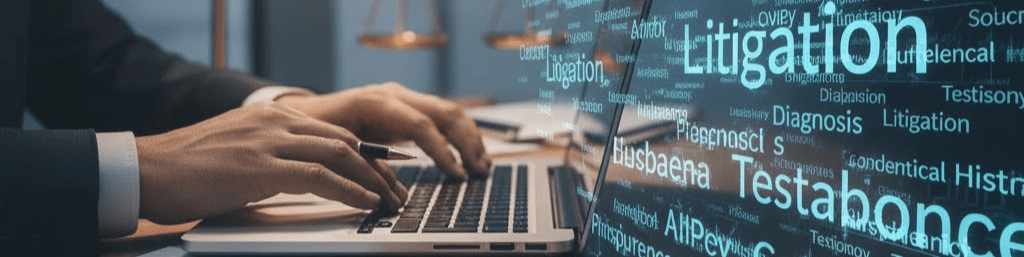
When Accuracy Matters More Than Speed
There are innumerable instances in business environments where there can be no compromise on accuracy. Here are a few:
Legal and Compliance Documentation
Accurate records are essential for accountability in legal and compliance contexts. Any errors can lead to real regulatory exposure.
Executive and Strategic Meetings
A misinterpreted point in the minutes can influence future planning, which is why leadership teams need genuine confidence in their documentation.
Research Interviews and Client Conversations
Customer feedback needs to be captured accurately because the context and nuance behind what a client says often shapes real business decisions down the line. This is where professional transcription services and human transcription services earn their place.
Why Human Transcription Still Plays a Critical Role
There are various reasons why human transcribers won’t be going anywhere anytime soon:
Humans Understand Meaning, Not Just Words
A trained reviewer recognises context, intent, and industry terminology in a way automated tools still can’t match. Ambiguities get clarified instead of guessed, and proper quality assurance meaningfully reduces the risk of a critical error slipping through.
The Best Results Often Combine Technology and Human Expertise
AI can accelerate the early stages of a transcription workflow, while human review adds the reliability and accuracy that sensitive content demands. The strongest results increasingly come from a hybrid approach rather than picking one option exclusively.
Choosing the Right Transcription Approach for the Job
AI transcription is effective for many routine business applications, but complex, high-stakes conversations often call for additional human oversight.
The goal is to understand where each delivers the most value and weigh the cost of a potential error against the benefits of speed and automation.
Professional transcription services provide the confidence businesses need when accuracy is non-negotiable.
If you’re not sure which approach is right for you, contact us and we’ll help you find the transcription services solution that matches your business’s requirements.